Most battery simulation work happens inside large OEM simulation frameworks — tools with hundreds of subsystems, long setup times, and infrastructure built for full-vehicle analysis. Useful when you need the full vehicle. Counterproductive when you need to iterate quickly on battery-specific questions.
At Volvo Trucks, the problem was clear: the battery and BMS teams needed a simulation environment they could actually use — fast iteration, battery-focused, not dragging a full vehicle model along for every run.
The Standalone Framework
The framework was designed around one principle: the battery and BMS should be first-class citizens, not subsystems of a larger model.
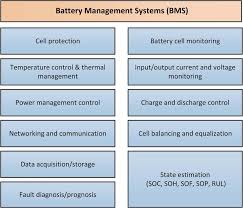
Architecture:
- Cell model layer — ECM and simplified P2D, selectable per simulation objective
- Pack model layer — series/parallel topology, cell-to-cell variation, thermal network
- BMS logic layer — SoC/SoH estimation, protection logic, charging control, state machine
- Load profile interface — drive cycle, stationary charging, arbitrary current profiles
- Output layer — automated result extraction, parameterised report generation
The BMS layer was the novel part. Most battery simulation frameworks treat BMS as an afterthought — a simple lookup or a fixed control law. This one implemented the actual BMS logic as a Stateflow-equivalent state machine, so the simulation could reproduce exactly what the real BMS would do under a given load profile. This matters because BMS decisions — derating, balancing, charging cutoffs — are what actually determine real-world battery behaviour in a vehicle.
What it enabled:
- SIL testing of BMS software against simulated battery behaviour before hardware was available
- Charging strategy comparison under realistic thermal conditions
- Pack-level performance sensitivity to cell-to-cell variation
The PINN Degradation Model
The second deliverable was harder: a battery degradation model fast enough to run on the Volvo fleet mobile app.
The constraint was severe. A full electrochemical ageing model — SEI growth kinetics, lithium inventory loss, active material degradation — runs in minutes per simulated cycle on a workstation. A mobile app needs a result in under a second, on a device with no GPU and limited memory.
Physics-Informed Neural Networks were the answer.
The approach:
A neural network was trained not just on degradation data, but with the governing differential equations for SEI growth and capacity fade embedded in the loss function. The network learns a compressed representation of the ageing dynamics that:
- Satisfies the physical constraints by construction (not just by fitting data that happens to satisfy them)
- Extrapolates more reliably than a pure data-driven model because the physics constrains the solution space
- Runs in milliseconds at inference time
Training data: Accelerated ageing test data across temperature, C-rate, and SoC window combinations, augmented with synthetic data generated from the full electrochemical model for operating conditions not covered by physical tests.
Inputs: Cumulative Ah throughput, temperature history (summarised as weighted average), average SoC, typical C-rate profile.
Output: Remaining capacity fraction, estimated remaining useful life.
What made it work: The PINN formulation prevented the network from learning physically impossible degradation trajectories — no capacity recovery, monotonic fade, correct temperature sensitivity direction. A pure neural network trained on the same data would have fit the training distribution but produced nonsensical extrapolations outside it. The physics constraints acted as regularisation with physical meaning.
The Lesson About Infrastructure
The framework and the PINN model are different kinds of deliverables — one is a simulation environment, the other is a deployed model. What they share is that both required thinking about the infrastructure first, not just the immediate modelling problem.
A standalone framework that only answers one question isn’t a framework — it’s a script. A degradation model that only works on a workstation isn’t deployable. The engineering decisions that make these useful — modular architecture, BMS-as-first-class-citizen, PINN formulation for mobile constraints — are upstream of the modelling itself.
That’s the part that takes longer and gets less credit. It’s also the part that determines whether the work is actually used.